




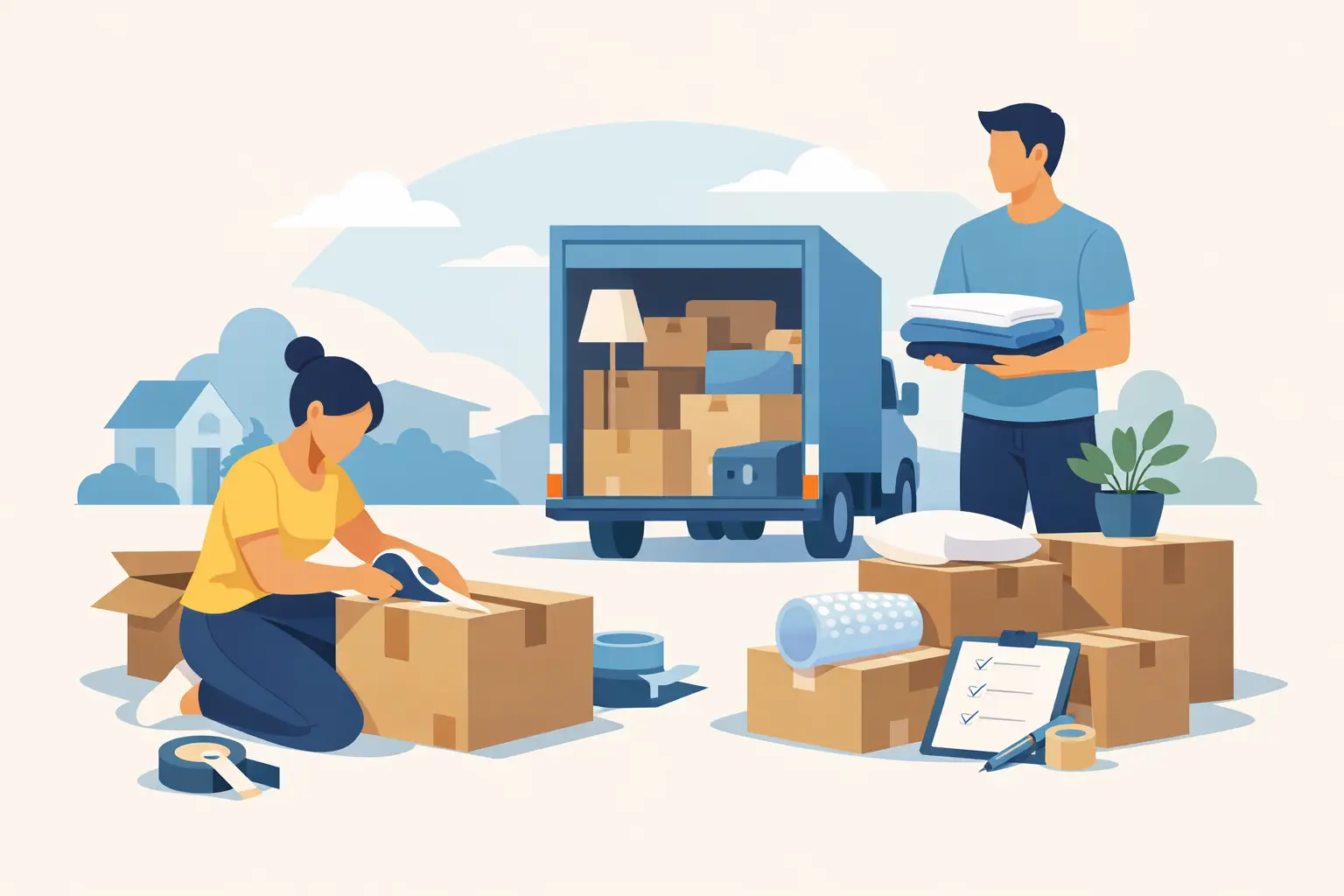
A local move can fool you. Because you are not crossing state lines, it feels like you can leave half the packing for later. Then later turns into the night before moving day, and suddenly every drawer, closet, and garage shelf is still full.
If you are figuring out how to pack for local move without turning your home into a pile of loose cords, open boxes, and broken dishes, the best approach is simple: pack with the move day in mind, not just the box in front of you. A short-distance move still needs a real plan if you want it done fast, safely, and with less stress.
Start by packing less, not faster
Before you tape a single box shut, cut down what has to be moved. This is where most people save the most time and money. If an item is broken, outdated, unused, or not worth carrying into the next place, moving it is usually a waste of effort.
Walk room by room and make quick decisions. Keep what you actually use. Set aside what can be donated. Pull out trash, worn-out furniture, and anything too damaged to keep. This matters even more in garages, sheds, attics, and spare rooms, where clutter tends to hide until move week.
There is a trade-off here. Sorting takes time up front. But it usually saves far more time on packing, loading, unloading, and unpacking. It also cuts down on the number of boxes you need and reduces the chance that your new place starts off cluttered on day one.
Get the right packing supplies before you begin
Packing goes smoother when your materials are ready before you start. You do not need anything fancy, but you do need enough of the basics. Running out of tape or trying to pack heavy kitchen items into weak boxes is where things go sideways.
Have a mix of small, medium, and large boxes on hand. Small boxes are best for heavy items like books, canned goods, tools, and dishes. Medium boxes work well for decor, pantry items, toys, and folded clothes. Large boxes should stay light – think pillows, linens, lampshades, and bulky but soft items.
You will also want packing tape, markers, bubble wrap or packing paper, and a few strong trash bags for soft goods or last-minute overflow. If you have drawers or cabinets full of loose items, zipper bags help keep hardware, cords, and small pieces together.
Used boxes can work for a local move if they are clean and solid. But if a box is soft, ripped, or warped, do not trust it with anything fragile or heavy.
How to pack for local move room by room
The easiest way to lose track of a move is to pack randomly. One box from the bathroom, two from the kitchen, then a handful from the office – that creates confusion fast. Pack by room and keep each box tied to one space as much as possible.
Start with the rooms you use the least. Guest rooms, storage areas, wall decor, off-season clothing, and extra dishes can usually be packed early without disrupting your routine. Daily-use rooms like kitchens, bathrooms, and main bedrooms should be packed later, but not at the last minute.
Label every box with the room it belongs in and a plain description of what is inside. “Kitchen – plates and mugs” is better than “kitchen stuff.” If a box contains anything fragile, mark that clearly on more than one side.
This is also the point where a little discipline helps. Do not make mystery boxes. When a box turns into a mix of office supplies, phone chargers, candles, and kids’ toys, unpacking takes twice as long.
Kitchen packing needs extra attention
Kitchens are usually the most time-consuming part of a local move. There are more breakables, more drawers, and more oddly shaped items than people expect.
Pack plates vertically with padding between them instead of stacking them flat. Wrap glasses one by one. Use small boxes for canned goods, utensils, and pantry items so they do not get too heavy. If you still have food in the fridge or freezer, have a plan to use it up, toss it, or move it in coolers if the timing makes sense.
A local move gives you more flexibility than a long-distance one, but that does not mean perishable food is easy to deal with. In South Carolina heat, even a short delay can turn refrigerated items into a mess.
Bedrooms are easier if you avoid overpacking
Clothes, shoes, bedding, and personal items feel simple until the boxes become too heavy to lift. Keep books and shoes in smaller boxes. Use wardrobe boxes if you have a lot of hanging clothes, or leave lighter clothing on hangers and group it in garment bags.
For dressers, it depends on the furniture. Sometimes a few lightweight items can stay in drawers during a short local move. But if the piece is heavy, older, or awkward to carry, empty it first. That makes it safer to move and reduces strain on the frame.
Bathrooms and laundry rooms need a quick sort
These spaces are usually full of half-used products, cleaning supplies, and items you forgot you had. Toss expired toiletries and nearly empty bottles. Tape shut any liquids that are being moved, and bag them separately so leaks do not ruin other boxes.
Keep one small essentials bag out for the last day in the old place and the first day in the new one. Include soap, toilet paper, towels, medicine, chargers, and a change of clothes.
Pack for loading and unloading, not just storage
A box that is technically packed is not always packed well. The real test is whether it can be carried, stacked, and unloaded without trouble.
Keep weight balanced. Fill empty space so items do not shift. Do not overload large boxes just because there is room. Heavier boxes should stay on the bottom, lighter ones on top. If you are moving lamps, mirrors, or small furniture, protect corners and separate delicate surfaces with blankets or padding.
Disassemble larger furniture ahead of time if possible. Put screws, bolts, and hardware in labeled bags and tape them to the item they belong to, or keep them all together in one clearly marked container. This saves a lot of frustration when it is time to reassemble beds, tables, or shelving.
If you have kids, pets, or elderly family members in the home, think about safety as you pack. Stacks of open boxes and half-wrapped furniture can quickly create tripping hazards.
What not to pack until the end
One of the biggest mistakes in a local move is packing useful items too early. You want progress, but you still need to live in the house while the move is coming together.
Leave out the basics you use every day: a few dishes, coffee supplies, toiletries, medications, chargers, important papers, and enough clothes for a couple of days. Keep cleaning supplies accessible too. You may need them after boxes are loaded or before handing over a rental.
Set these items aside in clearly marked bins, suitcases, or bags that stay with you rather than going onto the truck first. This is especially helpful if your move stretches longer than planned or you are cleaning and settling in on the same day.
When packing help makes sense
Some local moves are straightforward. Others are packed with tight stairs, heavy furniture, limited time, or years of built-up clutter. If you are also trying to clear out junk, donate usable items, and get everything moved in one window, doing it alone can drag the job out.
That is where full-service help can make a real difference. Having one local team handle packing support, heavy lifting, moving, and unwanted item removal cuts down on scheduling headaches and keeps the job moving. For many households and property managers, that is less about convenience and more about getting the work done on time.
Stan’s Junk Removal works with customers across Columbia and the Midlands who need that kind of practical support, especially when a move includes bulky furniture, cleanout work, or items that should be donated or disposed of responsibly.
A better way to think about moving day
Packing is not really about boxes. It is about making the day easier on your back, your schedule, and your household. If each room is sorted, labeled, and packed with a clear purpose, the move feels manageable. If not, even a short trip across town can feel longer than it should.
Give yourself enough time to make decisions, get rid of what no longer belongs, and pack in a way that helps the next step. A local move may be shorter in miles, but it still goes better when you treat it like a real project and not a last-minute errand.


