




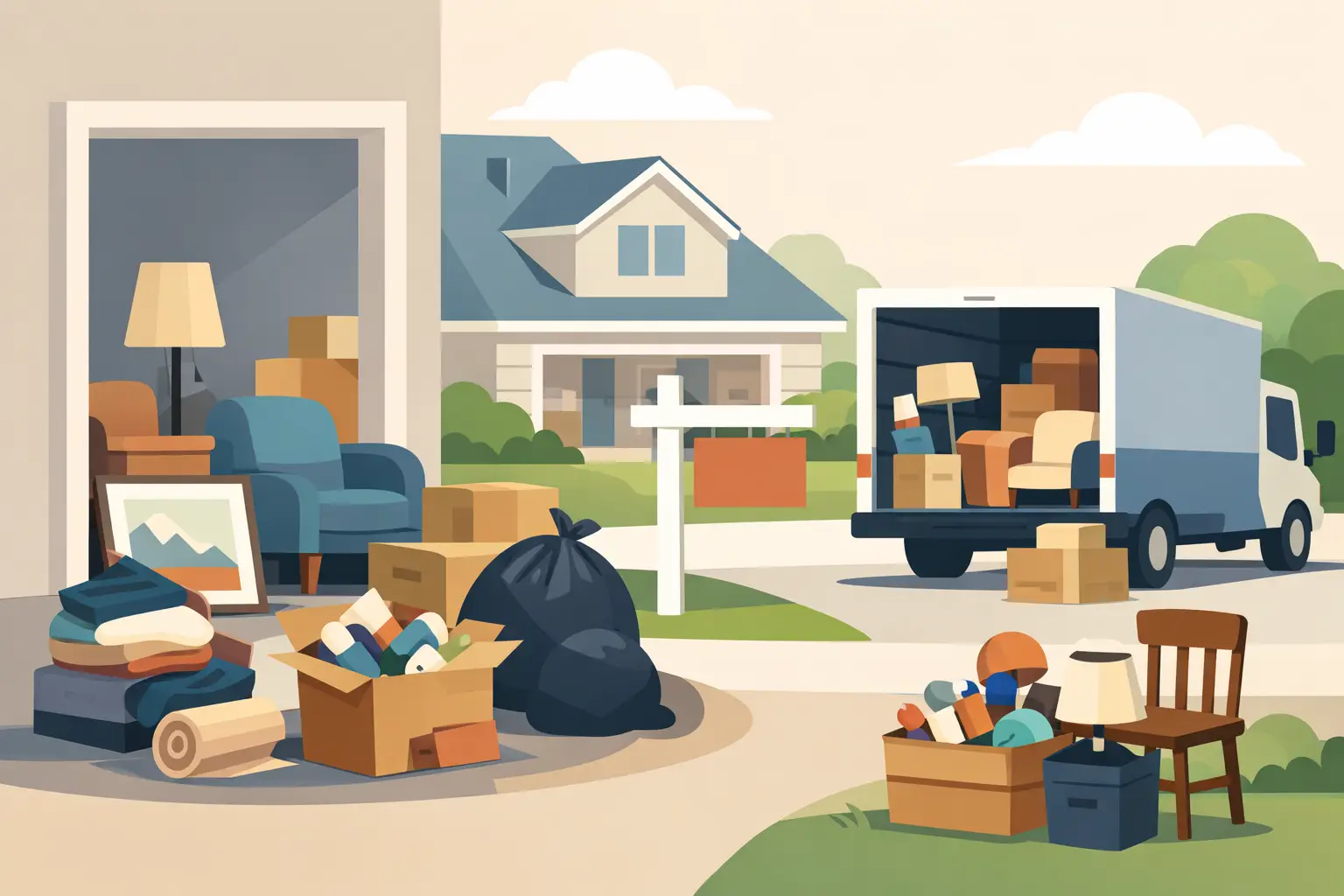
When a house is headed to market after a death, a move to care, or a family transition, the hardest part usually is not the listing paperwork. It is the estate cleanout before sale. You are not just getting rid of stuff. You are sorting through a lifetime of furniture, paperwork, keepsakes, and unfinished decisions while trying to make the property look ready for buyers.
That is why the cleanout needs a plan before anyone starts hauling boxes to the curb. A rushed job can lead to family conflict, missed valuables, damage to the home, and wasted money. A smart cleanout does the opposite. It clears the home, protects what matters, and helps the property show better from day one.
Why an estate cleanout before sale affects the sale itself
Buyers do not walk into a home and politely imagine around packed closets, overloaded garages, and extra furniture. Most react fast. If the house feels crowded, neglected, or hard to assess, they assume there may be bigger issues hiding underneath.
A proper estate cleanout before sale helps in a few practical ways. It makes rooms look larger. It gives buyers a clearer sense of layout and condition. It also makes it easier for agents, inspectors, photographers, and contractors to do their work. In many cases, the cleanout is what reveals the next set of steps, whether that means a simple deep cleaning or a few light repairs before listing.
There is also a time factor. The longer a property sits in disarray, the easier it is for tasks to drag out. Family members put off decisions. Donation piles grow. Trash pickup becomes piecemeal. What could have been a two-week process turns into two months. If your goal is a faster, cleaner sale, the cleanout is not a side task. It is part of the sale strategy.
Start with decisions, not dumpsters
The biggest mistake people make is starting with physical labor before making sorting rules. That usually creates more work, not less. Before anything leaves the house, decide how items will be handled.
Most families do best with four categories: keep, donate, sell, and remove. That sounds simple, but the real value is consistency. Once everyone agrees on the process, decisions get easier and the pace improves. If one person is treating every drawer like an antique archive while another wants everything gone by Saturday, the job can stall fast.
For estates with multiple heirs, it helps to set a deadline for personal selections before the full cleanout begins. Take photos of furniture and household items, let family members make requests, and document what is spoken for. That reduces arguments later, especially once the house starts to empty out.
Paperwork deserves its own caution. Do not toss file boxes blindly. Financial records, titles, legal documents, insurance papers, tax returns, and personal identification should be reviewed before disposal. The same goes for small containers, desk drawers, and old cabinets. Cash, jewelry, and important records often turn up in places no one expects.
What to remove first
Once the decisions are made, start with what clearly does not help the sale. Trash, broken furniture, old mattresses, expired food, unusable appliances, worn rugs, and random clutter should go early. These items add bulk without adding value, and they make every other stage harder.
Next, remove anything that makes the home feel overly personal or overfilled. That includes excess seating, crowded bookshelves, duplicate furniture, old exercise equipment, and packed storage areas. Buyers do not need to see every piece the family owns. They need room to picture the house as theirs.
If the home will be sold vacant, that can work well, especially when the property is dated or smaller. But it depends on condition and market expectations. In some homes, leaving a few clean, simple pieces for staging can help rooms feel more usable. In others, complete removal is better. What matters is that the house feels open, cared for, and easy to walk through.
The garage, attic, and shed usually decide the timeline
People tend to focus on bedrooms and living areas first because those spaces are visible. But the cleanout timeline often gets blown up by the garage, attic, shed, crawl space, or backyard.
These areas collect heavy, awkward items that require real labor and proper disposal. Old lawn equipment, paint cans, scrap wood, damaged shelving, appliances, tires, broken tools, and construction leftovers are common problems. Some of it cannot simply be set out for regular pickup. Some of it may need recycling or careful disposal.
This is where hiring help can save more than just time. It can prevent injuries, vehicle damage, and multiple runs across town trying to figure out what goes where. A full-service team can sort load types, do the heavy lifting, and help clear the property in fewer trips. For many families, that is the difference between a manageable project and one that drags into another month.
Donating what still has value
Not everything in an estate should be treated like junk. Good furniture, housewares, clothing, and working appliances may still have useful life left. Donation can keep usable items out of the landfill and help the cleanout feel less wasteful.
That said, donation is not the same as indefinite storage in the dining room. If you plan to donate, move quickly and be realistic. Many organizations will not take damaged, stained, incomplete, or outdated items. Holding onto marginal items because they might be useful to someone often slows down the sale prep.
A practical rule is this: if it is clean, functional, and in solid condition, it may be worth donating. If it is broken, heavily worn, or difficult to place, remove it and keep moving. During an estate cleanout before sale, momentum matters.
Cleanout first, repairs second
Some owners want to start painting or replacing flooring while the home is still full. That usually creates extra labor and extra cost. Contractors work better in open spaces, and you make better repair decisions once the house is cleared.
After the cleanout, walk the property again with fresh eyes. You will notice wall damage that was hidden by furniture, stains under rugs, old curtain marks, and flooring transitions that need attention. At that point, it becomes easier to decide what is worth fixing before listing.
Not every property needs major updates. Sometimes the right move is a full cleanout, deep cleaning, yard cleanup, and a few small repairs. Other times, a vacant house exposes enough wear that basic cosmetic work makes sense. It depends on the home, the neighborhood, and whether you are aiming for top-dollar retail buyers or a faster as-is sale.
When to bring in professional help
If the estate is small, local, and emotionally straightforward, family members may be able to handle it themselves. But many cleanouts are not like that. Heirs may live out of town. The home may be packed. The furniture may be heavy. The deadline may be tied to probate, listing photos, or closing plans.
Professional help makes the most sense when speed, labor, and disposal logistics are getting in the way. A local team can load furniture, appliances, bagged trash, garage debris, and general household clutter without making you coordinate three different vendors. If they also support moving, packing, and donation pickup, that can simplify the whole project even more.
For families in the Midlands, that kind of practical support matters. Stan’s Junk Removal is built around exactly these jobs – the ones where people need reliable help, clear communication, and someone to do the heavy lifting the right way.
A simple timeline for an estate cleanout before sale
In most cases, the cleanest approach is to work in phases. First, secure documents, valuables, and family keepsakes. Next, let heirs claim personal items by a set date. Then remove obvious trash and non-sellable clutter. After that, clear donation items and large unwanted furniture. Once the house is mostly empty, bring in cleaning and assess repairs.
Trying to do all of this at once usually leads to rework. People box items that should have been removed, move furniture twice, or pay cleaners before the property is actually ready. A phased approach keeps costs down and decisions clearer.
Keep the goal in front of you
An estate cleanout can feel personal because it is personal. But if the house is going on the market, the goal is not to preserve every room exactly as it was. The goal is to prepare the property for its next chapter without creating more stress, delay, or expense than necessary.
That usually means being thoughtful, but not stuck. Save what matters. Donate what still helps someone else. Remove what no longer serves the home. Then let the house show the way buyers need to see it – clean, open, and ready.


Junk Hauling Versus Dumpster Rental | Stans Moving And Junk Removal
05/03/2026 10:24 pm[…] you are managing an estate cleanout, it depends on the timeline and support available. Families who want the house emptied quickly with […]
Same Day Junk Hauling When Time Is Tight | Stans Moving And Junk Removal
05/13/2026 10:24 pm[…] can create bigger problems. A delayed pickup can hold up painters, cleaners, flooring crews, or new tenants. It can also leave homeowners stuck trying to work around bulky junk they do not want to move […]