




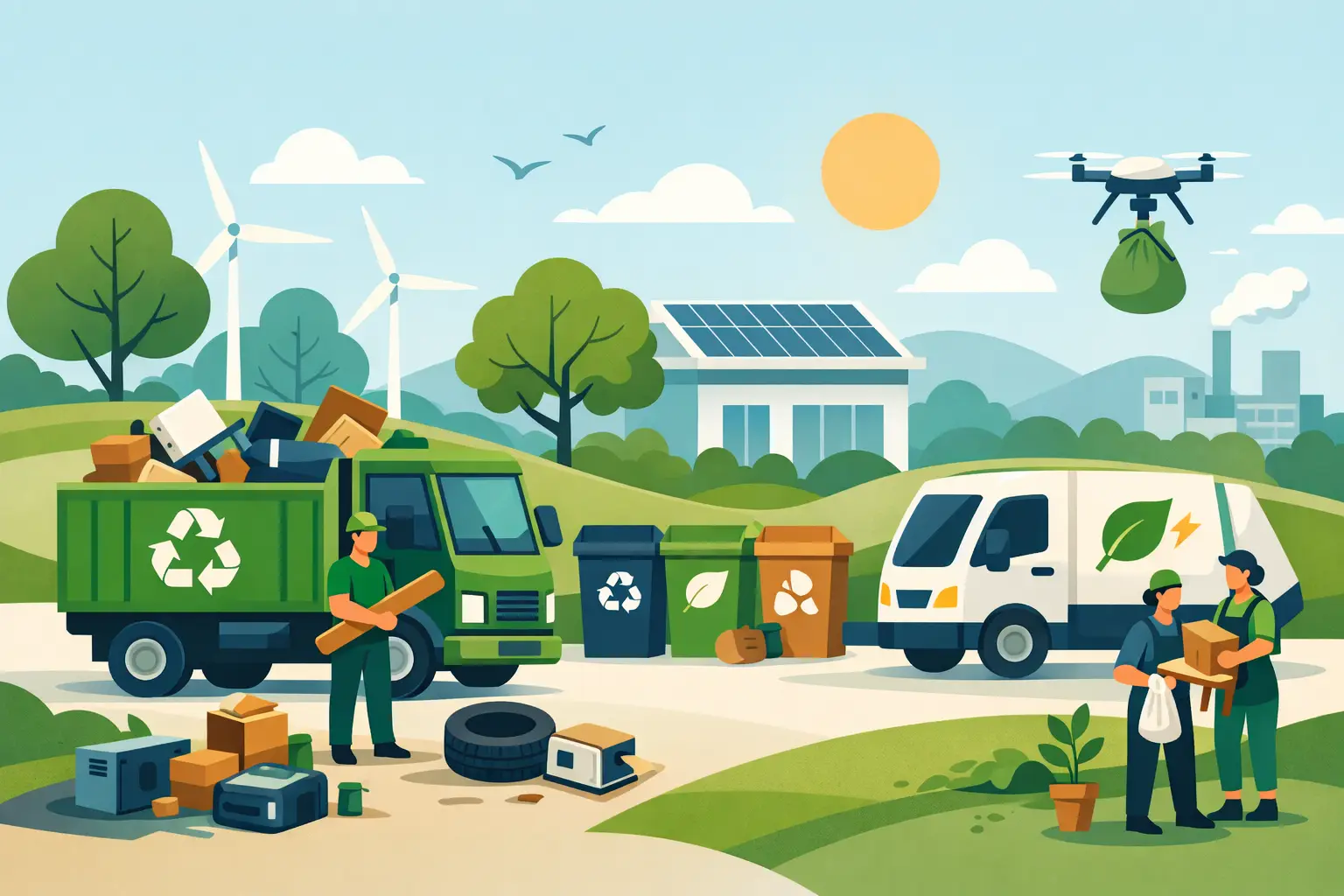
A lot of junk removal used to follow one simple path – load it up, drive it off, dump it fast. That is changing. Eco friendly junk removal trends are pushing the industry toward better sorting, more donation recovery, and less landfill waste, and that matters if you are clearing out a home, turning over a rental, managing an estate, or getting ready for a move.
For customers in Columbia and across the Midlands, this shift is practical, not just feel-good. You want the job done quickly, but you also do not want usable furniture, working appliances, scrap metal, or boxed household goods treated like pure trash. The best junk removal now means heavy lifting, responsible handling, and a clear plan for where items go next.
Why eco friendly junk removal trends matter now
The biggest reason is volume. Homes fill up faster than most people realize. A garage cleanout, a downsizing move, or a rental property turnover can produce old mattresses, broken shelving, yard debris, electronics, cardboard, worn furniture, and a surprising amount of reusable household items.
Landfills are still part of the disposal picture, but they are no longer the default answer for everything. Customers are asking more questions before they book. Can this be donated? Can metal be recycled? Do you separate usable items from actual debris? Those questions are becoming standard because people want convenience without feeling like they are wasting half the load.
There is also a local angle. In a community like Columbia, responsible disposal is not an abstract issue. Illegal dumping, overloaded bins, and careless hauling affect neighborhoods directly. Cleaner disposal practices help protect property values, reduce eyesores, and support local charities and recycling channels that can still use what someone else no longer needs.
The biggest eco friendly junk removal trends customers should know
One clear trend is better sorting at the truck level. Instead of treating a whole pickup as one category, more crews are separating materials during or right after loading. Metal, electronics, cardboard, and usable furniture often need different destinations. That takes more effort on the back end, but it reduces landfill volume and gives more items a second life.
Another trend is donation-first hauling. This is especially relevant during moves, estate cleanouts, and downsizing jobs. Many loads include gently used dressers, bed frames, tables, lamps, kitchenware, and clothing that still have value. Not every item qualifies for donation, and condition matters, but more junk removal companies are building donation drop-offs into their process instead of leaving that step entirely on the customer.
Recycling is also getting more specific. Ten years ago, people might have thought of recycling as paper, cans, and maybe a few plastic bins. Now, more removal jobs involve scrap metal recovery, appliance recycling where allowed, electronics handling, and green waste separation. The trade-off is that not every item can be recycled easily, and local rules vary, but the trend is moving toward more material recovery and less mixed disposal.
There is also growing demand for cleanout services that support reuse before hauling. That means identifying what can stay, what can be donated, what can be sold, and what truly needs removal. This matters for families handling estates or adult children helping parents downsize. A full cleanout is often emotional, and an eco-friendly approach tends to be more careful and less rushed.
Donation and reuse are becoming part of the service
One of the most noticeable eco friendly junk removal trends is that customers no longer want to coordinate five separate tasks just to clear a property. If you are already trying to schedule movers, cleaners, property repairs, or a lease turnover, you do not want to spend extra days finding donation centers on your own.
That is why integrated service matters. A team that can haul away junk, set aside reusable items, and help move or pack when needed saves time and reduces confusion. It also leads to better outcomes because donation-eligible items are less likely to get mixed into debris by accident.
There are limits, of course. Donation centers do not take everything. Upholstered furniture may be rejected if it is damaged or stained. Mattresses often face stricter rules. Some electronics are accepted only under certain conditions. A dependable junk removal crew should be upfront about that. Responsible disposal is not about pretending every load can be saved. It is about making the effort to recover what reasonably can be recovered.
What these trends look like on real cleanout jobs
In a residential cleanout, eco-friendly practices often start with identifying categories before the truck is full. An old grill and broken washer may go toward metal recovery. Boxes of housewares may be suitable for donation. Tree limbs and yard debris need a different disposal path than office chairs and carpet scraps.
In apartment and rental turnovers, speed matters, but sorting still helps. A landlord may have leftover furniture, bagged trash, loose shelving, and abandoned electronics all in one unit. The fastest service is not always the most responsible service. The better approach is efficient removal with enough sorting to avoid tossing recyclable or reusable materials unnecessarily.
For office or small business cleanouts, the trend is more organized handling of desks, chairs, monitors, fixtures, and storage pieces. Businesses want a clean space fast, but many also care about sustainability and community reputation. Reuse and recycling options can make a difference, especially when replacing furniture or clearing space during a move.
How to judge whether a junk removal company is actually eco-conscious
This is where customers need to look past marketing words. A lot of companies say they care about the environment. The better question is what their process actually looks like.
A trustworthy company should be able to explain how it handles donations, recyclables, and general waste in simple terms. You should hear practical answers, not vague promises. If a crew is serious about responsible disposal, they can usually tell you what kinds of items are commonly donated, what gets separated for recycling, and when landfill disposal is still necessary.
You should also pay attention to how they talk about labor and logistics. Eco-friendly junk removal is not just about where items end up. It is about planning, route efficiency, and careful loading. A company that shows up on time, loads properly, and handles items with care is more likely to keep reusable goods in decent condition.
Local knowledge matters too. Disposal rules, donation options, and recycling access can vary by area. A local operator serving Columbia and the Midlands will usually have a better sense of what can be redirected responsibly and what cannot.
What customers can do before pickup
You do not need to sort every single item to support a cleaner disposal process, but a little preparation helps. If you know certain items are in good condition, point them out. If there are obvious recyclables like metal shelving, appliances, or electronics, mention them when you request a quote. If you are dealing with a move or estate cleanout, separating sentimental items from removal items ahead of time can also prevent mistakes.
Photos can help with larger jobs. A quick set of pictures lets the hauler plan truck space, labor needs, and disposal categories more accurately. That means fewer surprises and a smoother pickup day.
It also helps to be realistic. Some things are simply at end of life. Water-damaged furniture, heavily soiled mattresses, broken particleboard, and mixed debris often have limited recovery options. Responsible disposal still matters in those cases, but the answer may be proper landfill handling rather than donation.
Where eco friendly junk removal trends are headed
The next phase is likely to be more transparent and more service-driven. Customers want clear answers about what happens after pickup. They want companies that can do the heavy lifting without taking shortcuts. They also want one team that can help with related tasks like moving support, packing help, and donation pickup when a property transition gets complicated.
That fits the direction of the market. People are busy, properties need to be cleared fast, and nobody wants a simple cleanout to turn into a week of separate errands. The companies that stand out will be the ones that combine speed with responsibility and treat reuse, donation, and recycling as part of the job, not an afterthought.
For homeowners, renters, landlords, and businesses, that is good news. Better junk removal does not have to mean slower service. Done right, it means less clutter, less lifting, fewer headaches, and a better chance that your unwanted items are handled the way they should be. If you are planning a cleanout soon, the smartest first step is choosing a crew that works hard, shows up ready, and treats responsible disposal as part of doing the job right.


